














Can a Danish popstar make rye bread cool?

Many Danish teenagers skip breakfast, rely on quick snacks, and get far too little wholegrain. That was the backdrop for Lantmännen Schulstad’s recent campaign, which features a weightlifting Danish popstar as an ambassador for adding rye bread to your daily routine.
Older generations in Denmark will easily remember how their school or high school lunch looked like: several slices of ryebread with some kind of topping in a packed lunch box. While it was not always the most exiting meal, it still delivered nutritional value thanks to the wholegrain-rich rye bread.
"Today, rye bread consumption is declining among children and especially among young people", says Anne Sofie Snoer, Marketing Manager at Lantmännen Schulstad, a Danish brand in Lantmännen Unibake.
Recently, we published a survey – “Kernetal 2025” – about Danes’ bread habits, with a particular focus on teenagers’ eating patterns. The survey finds that one in three teenagers aged 15–18 typically skips breakfast. When they do eat in the morning, it’s most often white bread. Only 25% choose oatmeal. 48% get no wholegrain at all from either oatmeal or rye bread on a typical day. Considering that these are two of the most important wholegrain sources, the numbers are deeply worrying.
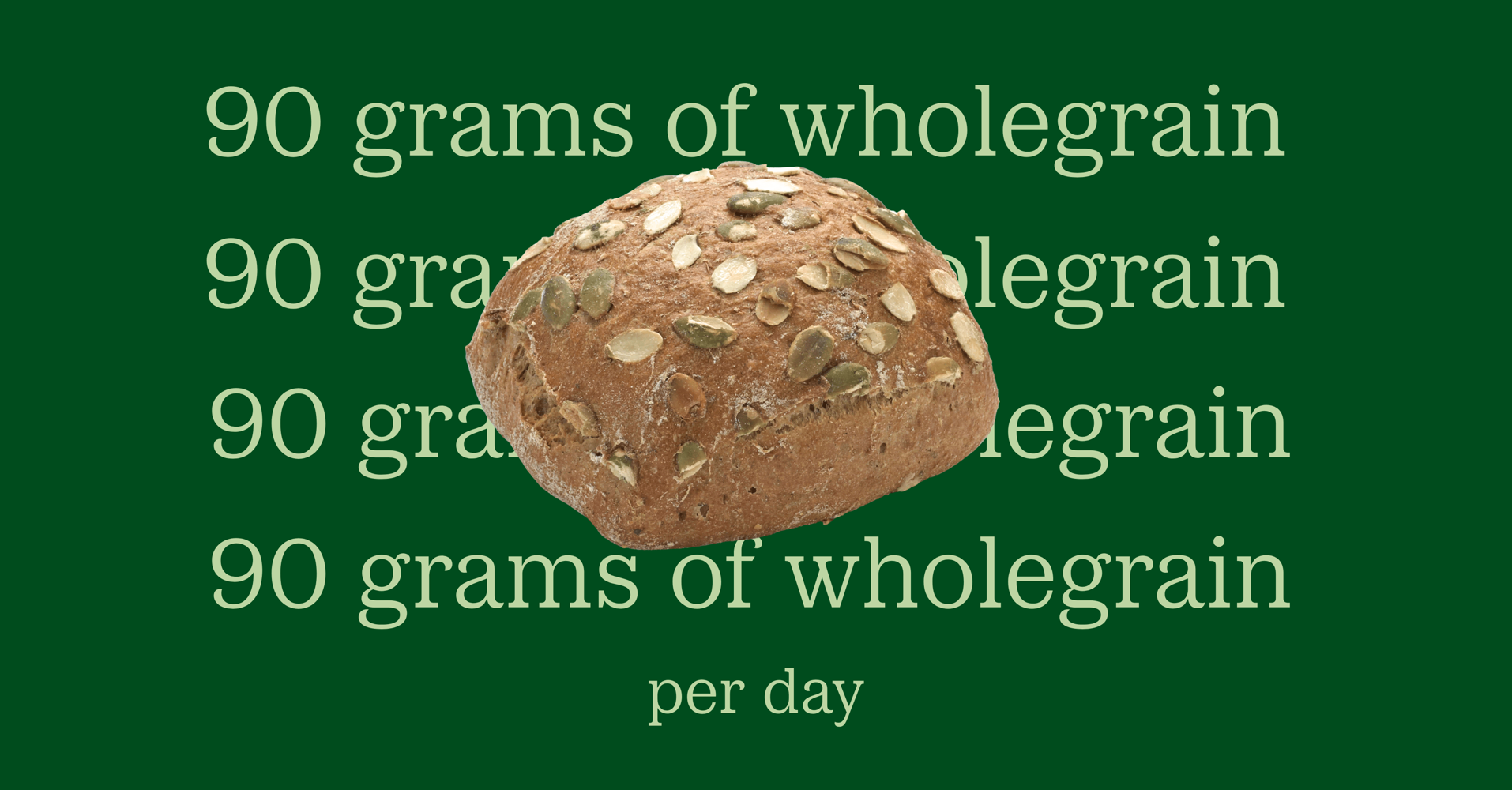
The official recommendation is for everyone to eat 90 grams of wholegrain every day, and even though Danes have the highest average daily intake in Europe and probably the world – 82 g per day in 2019, largely driven by the cross-sector work of the Danish Whole Grain Partnership – 60% of the population still doesn’t eat the recommended amount. Notably, amongst them children and adolescents.
Young people graze through the day and are increasingly drawn toward foods that sit far from nutritional recommendations. “When they go to the supermarket to buy lunch, they often choose energy drinks, sweet baked goods, chips, candy, and quick grab-and-go meals. Only 6% choose a rye-bread product,” says Anne Sofie Snoer.
One in five children and young people in Denmark live with overweight. The unhealthy habits formed in childhood and adolescence often continue into adult life, which amplifies the long-term consequences of poor dietary choices.
Rye bread has an image problem
Part of the explanation for the decline in rye-bread consumption lies in social dynamics. Young people may actually like rye bread, but they do not want to be seen with it. Image concerns and the fear of comments from peers play a clear role. For many, food choices are tied to identity, and a traditional open rye-bread sandwich clashes with what is viewed as stylish, and yes, cool.
To start a conversation with teenagers about eating habits and nutritional value, Lantmännen Schulstad launched a campaign built around an unexpected partnership. They knew that a traditional corporate message would not be taken seriously by this age group. Instead, they let a well-known cultural figure carry the message in his own voice. That figure was Danish musician and popstar Tobias Rahim, who is a top 10 artist in Denmark.
“He actually reached out to us,” Anne Sofie Snoer explains. “It turns out, he genuinely loves rye bread.” In the campaign video, Tobias Rahim is shown working out in the middle of a rye field, lifting hand weights with a clear sigh and a firm look into the camera, while the text reads: Powered by rye bread. Check the video out here.
The campaign ran on Tobias Rahim’s social channels and in selected cinemas, supported by a PR effort, and it produced measurable outcomes. One of Tobias Rahim’s organic posts generated 352,000 views and 14,000 interactions, and the PR work delivered a news reach of more than 4 million.
“We are very happy with the campaign,” Anne Sofie Snoer says.
Bread for a new generation
Internally at Lantmännen Schulstad, the campaign is viewed as the first step in a broader effort to reconnect rye bread with a new generation.
The traditional pattern of three structured meals is giving way to a more flexible, on-the-go approach, where food is fitted in between school, leisure and social activities. In this setting, a classic slice of rye bread rarely matches the pace or preferences of today’s teenagers.
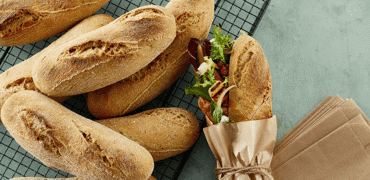
To stay relevant, the product offering must fit the moments where young people actually eat. This requires rethinking formats and creating solutions that feel natural in their daily routines. Recently, Lantmännen Schulstad launched a new product, “Rug Go”, a play on rye bread to go, as an example of how to engage with a new generation.
The long-term ambition is to provide options that align with today’s eating culture rather than trying to revive the habits of earlier generations.